Blog

Turner Prize Winner, Nnena Kalu

  Wrapped Sculpture, Nnena Kalu

The prestigious Turner Prize was recently awarded to Scottish artist, Nnena Kalu. Her canvases are gorgeous swirls of colour; her breathtaking sculptures are bound and layered wrapped materials that explore materiality, layering, scale, space and repetition. In addition to being a remarkable artist, Kalu is not neurotypical. Sadly, the artist’s neurodivergent status has overshadowed the artist’s brilliant work for which she won the coveted award.

If you’ve been following my posts, you will know that my mantra is “lead with the art.” In other words, promote the art, not the artist’s personal characteristics and traits which can, in my opinion, fetishize and marginalize the artist’s work. However, in the world of outsider art, and particularly the European concept of art brut, the artist’s personal characteristics often take centre-stage in presenting their work. The art world’s response to the Turner award were mixed. Naysayers have loud voices. The controversy was beautifully summed up by Eddy Frankel for artnet:

I can’t remember the Turner Prize ever pulling people in so many different directions, engendering so much effusive praise, celebratory vindication, and sneery dismissiveness at the same time. As for the negative reactions, they should be treated with the same scorn they’ve treated Kalu with. Jonathan Jones dismissing the work as “academic” in the Guardian badly missed the mark. Waldemar Januszczak saying dumb stuff in the Times about how the sculptures look “as if zero thought had gone into making them” (rarely has a sentence so desperately made me want to claw my own eyes out), or how the jury had confused “therapy with talent” (Jesus Christ, forget my eyes, I want to claw my own brain out now) is the kind of thick-headed, antiquated, troglodytic, self-preservational, geriatric clickbait that will lead to the death of art criticism.

Well said.

The point of all this is that art is art. Nnena Kalu won the Turner Prize because she made the best art. She is an accomplished artist who is entitled to stand proudly beside her peers in the art world, regardless of how her brain functions.
Indigenous art ≠ outsider art

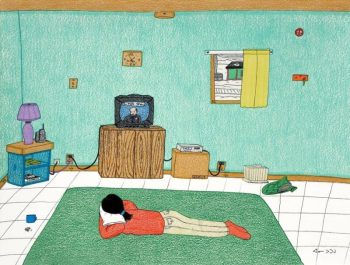
  Annie Pootoogook, Junior Rangers (2006)

I am often asked about Indigenous art when I am outside Canada, as many equate it with outsider art, perhaps because it is foreign and exotic to their eyes. They say they have not seen anything like it before, especially art from Canada’s Inuit communities. But novelty is not synonymous with outsider art, and it would be unfortunate if such views reflected outdated notions of so-called primitive art. This topic is explored my book, Outsider Art of Canada, but here is a brief synopsis.

The move to apply the outsider art label to Canadian Indigenous art is puzzling, as the label is not attached to the work of Indigenous artists in other countries. The artwork of Native Americans, Indigenous Australian peoples, or New Zealand Māori, for instance, is not considered outside of anything  — it is respected as art in its own right. Yet some seek to place Canada’s Indigenous artists in the outsider art category, arguing that the effects of colonialism are directly responsible for the marginalized status of their people. While the same argument can be made with respect to Indigenous peoples in other countries, there has been no move to attach the outsider label to their artwork. While he trauma of Canada’s Indigenous population through centuries of oppression is an undisputed fact, the artwork of a marginalized population ≠ outsider art. In fact, the work of traditional Canadian Indigenous artists reflects styles particular to each community while other artists, like Lawrence Paul Yuxweluptun and Ken Monkman, have moved into the contemporary art world.

Contemporary Inuit drawings (of the past 20 – 25 years) certainly offer a fresh perspective on life in Canada’s north and the art is admired by outsider art collectors, particularly those who embrace folk and naïve art as part of the outsider art genre. But the drawings are not part of traditional Inuit culture; they are a new art form with a remarkable history. In the 1950s, the government of Canada relocated the nomadic Inuit population to permanent community settlements. With diminished means to support themselves, Japanese printmaking was introduced by Qallunaat (non-Inuit)  to the Inuit community of Kinngait, Nunavut as a way to boost the local economy. While the prints depart from conventional Inuit imagery, that does not mean they belong in the outsider art category. Perhaps it is more accurate to say that their work has matured beyond the borders of more traditional first and second generation Inuit art. Today, production of prints is a significant source of income for Arctic communities and the prospect of financial independence is the impetus for many Inuit artists. In contrast, outsider artists are compelled to create for personal reasons; financial reward and recognition is not what drives them to create art.

The definition debate

Why are there so many definitions of outsider art in Canada?
May 24, 2025

Artist:  Anick Langelier, Canada

I am often asked why the definition of outsider art varies so much, particularly on the west coast of Canada. One of the reasons is access to funding.

Opening an art gallery anywhere is a daunting prospect. The costs are staggering and the risk is high. In addition to rent, taxes, insurance, marketing and salaries, there is the possibility that the public will not want to buy the art you are offering. Particularly in Canada, where little is known about outsider art and tastes run to decorative art and landscapes, selling outsider art is a risky venture. However, funding from all levels of government (municipal, provincial, and federal) may be available if the art enterprise addresses current social issues. In other words, featuring the work of artists with mental illnesses, disabilities, housing challenges, and so on, may entitle the business owner to obtain supportive funding. In some cases, the art seems to take a back seat to the artist’s personal circumstances, a position that would be untenable anywhere else in the world. Tying the gallery’s entire identity with outsider art is a bold step and one that is taken only in British Columbia. Elsewhere in Canada, as in Quebec, an art gallery may include work by outsider artists but the work holds up without a label. It is powerful, remarkable art that deserves to hang alongside the work of professional artists.

As I’ve often stated, labelling artwork as outsider art is not always accurate. It is the artist’s intention and drive to create art that leads to application of the outsider art label, not their personal circumstances. Curators should lead with the ART, not the artist’s personal characteristics or social status.

Ethical issues in Outsider Art

outsiderThere are important ethical issues in the outsider art world – most importantly, those concerning the artist’s consent for others to access their artwork. Although it is sometimes framed as an ethical issue it is, in fact, a legal issue. I am raising the topic here because I have been asked questions about practices that may infringe on the rights of artists who are vulnerable to exploitation.

Although the definition of an outsider artist varies from country to country, many reference an artist’s compromised mental health as a defining feature. Some communities include art made by artists with developmental disabilities in the category of outsider art. Laws concerning people with such diminished mental capacity varies from country to country, but there are undoubtedly laws to protect vulnerable people. While protection laws often relate to the person’s consent to care and medical treatment, they also apply to the person’s ability to consent to other things, including what happens to art they have created. In short, if an artist is suffering from a mental illness or developmental disability to such a degree that they cannot give informed consent to their artwork being viewed, exhibited, bought, or sold, then a legal guardian must consent on their behalf. (Informed consent means the person is able to understand what they are told and therefore capable of making a reasoned decision for themselves.)

Art worlds and art markets

February 4, 2025

Artist:  Karl Goertzen

In any discussion about art, outsider or otherwise, it is important to consider how the artwork made the journey from the artist’s studio to a gallery or museum. There are millions of artists in the world and most of them are frustrated because they have no venue to exhibit their work, no gallerist who supports their vision, and no income that reflects their hard work. Are some artists just lucky?

While many outsider artists do not want to share their work with the public, most artists would like their talent to be acknowledged but feel excluded from the art market. But art doesn’t exist in a vacuum.  There are established social structures made up of institutions (like art academies and museums), support systems of influential patrons and critics, and opinions about artists and artmaking. Often it comes down to a gallerist’s business decision about whether the artwork is marketable or not. Linda Nochlin (a feminist art historian) and Howard Becker (who wrote about the sociology of art) explain that art becomes public through collective actions: the cooperation of artists, suppliers of materials, art distributors, critics, and audiences. These individuals and organizations collaborate to create art worlds, like contemporary art, folk art, outsider art, etc.

While there is a world of outsider art in that there is a community of those who advocate for it, there is no outsider art world per se, for that would suggest the artists are engaged in critical dialogue with each other and their supporters, like collectors, gallerists, and academics. In reality, outsider artists are not connected to any art-related world; their work is personal, singular, and highly individualistic. They are not part of the discussion about the parameters and definitions of outsider art because they are not interested in such issues. Their work reaches the public only through the efforts of those who champion the genre.

Outsider art is outside the continuum of art history, outside the parameters recognized by established art institutions, and outside the collective discourse of the mainstream art world.

Are all self-taught artists also outsider artists?

I am often contacted by artists who ask if they are an outsider artist because they are self-taught. The short answer is NO. Although outsider artists, particularly in the United States, are sometimes called “self-taught artists,” the international definition of an outsider artist goes far beyond their lack of training. In fact, in Europe, the artist’s deteriorating mental health may be a factor in categorizing their work. An artist’s lack of formal art training is only one characteristic of an outsider artist.

Many artists are self taught. For example, folk artists (like Canada’s Maude Lewis) are self-taught, but they are not outsider artists because they produce illustrative work, typically depicting the external world, like landscapes, animals, or people going about their daily activities. They are sometimes called naïve artists because their work is simple and direct. Like art hobbyists, they are proud to get recognition for their efforts and actively market their collection to the public.

Some mainstream contemporary artists (like Andrew Wyeth and Canadian painter, Matthew Wong) are self-taught. However, they are part of the contemporary art world because they engage in a dialogue with others in that world, like curators, critics, and other artists. They produce work that is recognizable, and recognized, by others within that system and to the public.

In contrast, outsider artists do not seek public recognition for their work. They are prolific creators who work in private. Creating art is a very solitary and personal pursuit for them;  they have no interest in engaging in a dialogue about their work with other artists, supporters, collectors, gallerists, or academics. Their work is personal and highly individualistic. I think of it as a dialogue with themselves. Perhaps they are exploring personal issues or illustrating a private story.

The definition of outsider art is fully explored in chapter 3 of my book, Outsider Art of Canada available in bookstores and online.

Kevin House: Exhibition in Vancouver, BC

July 6 to 26, 2024
Outsiders and Others Gallery
716 East Hastings, Vancouver

kevin house

Kevin House is a featured artist in Outsider Art of Canada, by Linda Rainaldi, recently published by 5 Continents Editions, Italy. His upcoming exhibition is a book about a book that never got written, an artist who destroyed all of his paintings, photographs of sculptures of cameras that are not exactly cameras, the last ticket booth, letters to and from a star, conundrumology, and many more creations from the wild imagination of Kevin House.

Kevin’s work has been exhibited at the New York Outsider art fair, the college of Charleston where he was artist in residence, the Grunt gallery video screen and many others. His music has been in the top ten of the year at NPR radio and nominated for a Leo award for the soundtrack to the feature film “ Down River.“

Martine Birobent (d. March 30, 2016)

160406_779lc_martine-birobent_sn635It is with great sadness that I write about the passing of Martine Birobent. Her epitaph notes that she died as she lived – fully and deliberately. Suffering from cancer, she chose medical assistance to die on March 30th  in her hometown of Danville, Quebec.

I wrote about Martine in a previous blog about my visit to La Galerie des Nanas in Quebec. I didn’t have an opportunity to meet her then, as she was away exhibiting her work in France. I knew, however, how passionate she was about her art and promoting the work of other women artists. She was a trailblazer in Canadian outsider art and we owe much to her personal vision about art insubordinaire (insubordinate art). I can honour her best by showing you images of her quirky and imaginative work. Spend some time on her website at http://www.birobent.com/oeuvres/.

Thank you, Martine.

Danse-et-mouvements-05-270x270thumb (1)


Sculpture-Zled-Dolls-War-Witch-sq300dpi-270x270Sculpture-Madonnes-Vierge-aux-aboisdetail

Gee’s Bend quilter Louisiana Bendolph

Louisiana_Bendolph,_History_0I was last blogging about  Gee’s Bend quilts and my introduction to the work of the remarkable women who make them. I met two quilters, Louisiana Bendolph and her mother, Rabbit, at Lonnie Holley’s workshop last fall. I sat beside Louisiana, a modest and reserved woman, and looked through a beautiful book about the quilts, as well as the autobiography she contributed to the book.

gees-bend-quiltmakers-mayday-by-louisiana-bendolph

When I closed the book, Louisiana asked me what I thought about it. I was at a loss for words. You see, her biography reads like something I would have expected from an African-American woman over a hundred years ago, not someone who was born in 1960. As I’ve said before, my knowledge of American social history comes from books; I have not lived there or experienced the truth of racial oppression. It looks quite different in real life.

But Louisiana was patient and waited for me to speak. I said how sad I felt to learn about her childhood. From age 6, Louisiana worked with her family in a cotton field, from sunup to sundown, every day except Sunday, which was saved for church. She felt wistful as the school bus passed her by. She went to school only on rainy days (not many) and from the end of November to March when it was time to start planting crops again. She didn’t have much of a childhood, and says her life was hard, but they had to work in order to survive.

bendo_l-American-Housetop_web

Louisiana watched the women in her family make quilts, but didn’t make her own until she was 12, and only then because it was something to do. Her life was busy with children, a husband, and a low-paying job. In 2002, she went to Houston to see the Quilts of Gee’s Bend exhibit and admits that she didn’t know what to expect other than seeing some old quilts. She was shocked to see her name in a book beside a photo of one of her quilts. She was profoundly moved when she saw her great-grandmother’s quilt on display, realizing that she had created something important and continued to live through her artwork.

Louisiana had always thought her quilt-making days were over. She had made enough quilts to keep her family warm. But on her way home from the exhibit, Louisiana started having visions of quilts. She says the visions have never disappeared and she keeps making more and more and more quilts. Sometimes she holds the design in her mind and sometimes she draws it on paper. It’s mainly about colour for Louisiana and her quilts are a testament to her exquisite sense of design and colour.

LB imageI met Louisiana and her mother a few days later at a  music event featuring Lonnie Holley. I had a visit with her before the concert began and she told me that she was going to be on stage with Matt Arnett (their manager) and participate in the introductory lecture. She hadn’t planned what she would say; she was a storyteller and the story would unfold as she said the words. Unfortunately, Arnett dominated the session, telling stories about himself and his father who began collecting outsider art many years ago. Listening to him was painful. His words were fuel for his own ego, not for the artists and musicians who were the stars of the event. Time ran out. Louisiana didn’t have an opportunity to speak.

Read paragraph 2 again. Just sayin’.

The Gee’s Bend Quilters

images (3)I have no excuse for my blog silence since I finished my degree.  Laziness, perhaps. Recharging, probably. Anyway, I have been prodded along by some of my readers, so here we go.

I left off writing about artist Lonnie Holley and his visit to Vancouver. He came with the Gee’s Bend Quilters, and that was an eye-opening (and eye-popping) experience for me. I had heard of these quilters, but that was the extent of my knowledge. Unfortunately, I missed the lecture they offered about their work, but I did get to meet them at the workshop with Lonnie Holley.
images

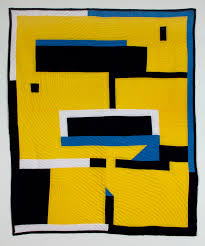
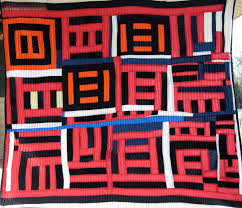
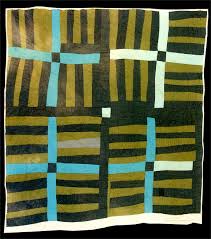
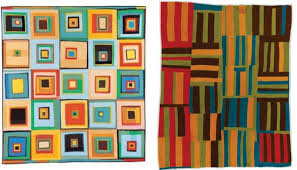
Gee’s Bend is a very small, riverside community in Alabama.  As you might have guessed, the community has a long, and inexcusable history of plantations and slavery. Perhaps the only good news to come out of that area is that the quilting collective has carried on their quilting traditions, with skills passed down through the generations. Notice was taken of the work in the 1960s; now their quilting masterpieces hang in museums and are recognized as one of the most important African-American visual and cultural contributions to art history in the United States. Documentation suggests that their unique abstract style evolved because of their geographical isolation and unusual degree of cultural continuity.

This blog serves only to introduce you to the quilters’ stunning work. Enjoy.

download

images (2)

download (1)

images (1)